Exhibition notes: acoustic lighting as architecture
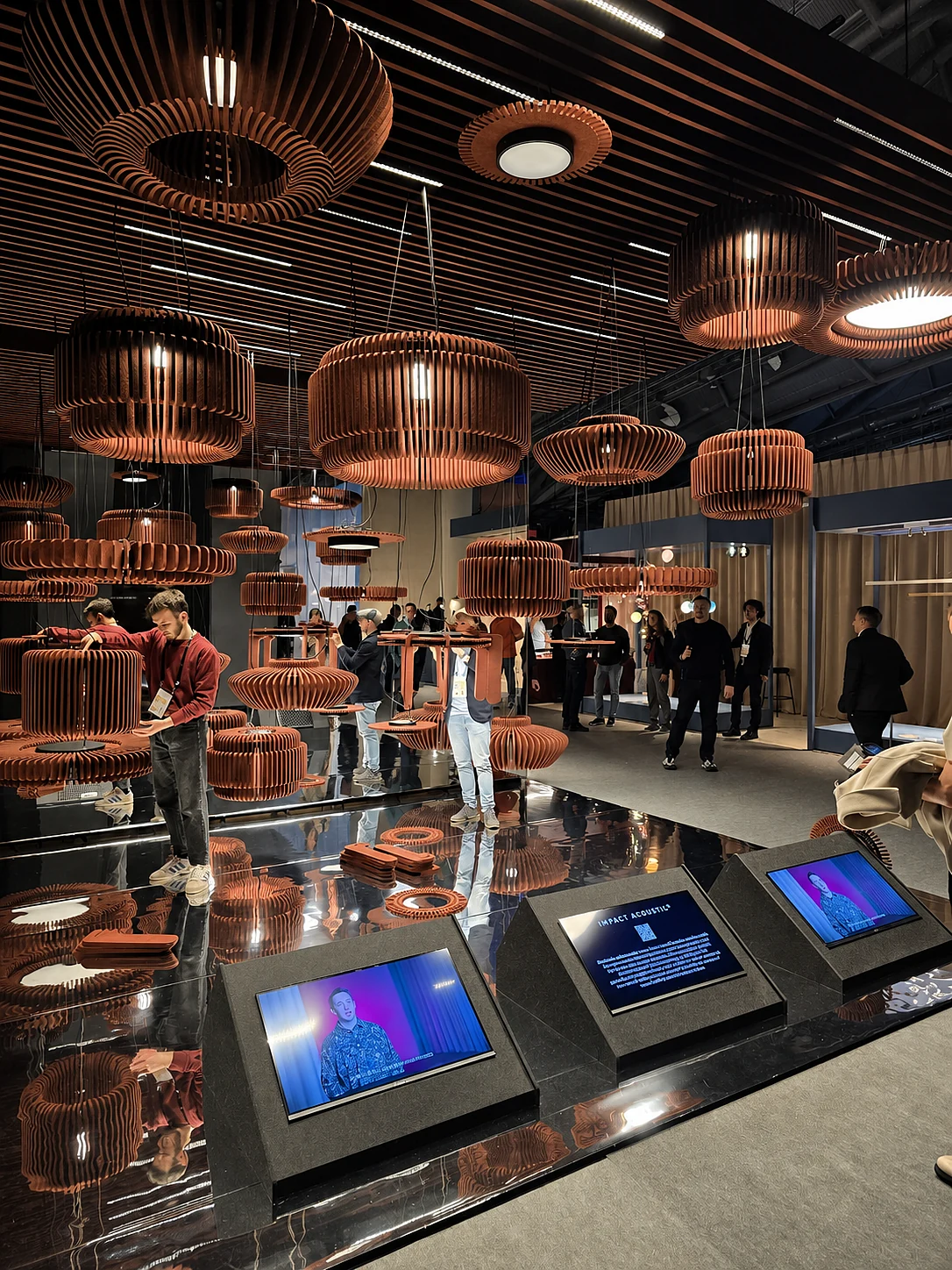
This exhibition display brings acoustic lighting and a repeated ceiling system into one spatial composition. It shows how a material can establish both individual objects and an architectural setting.
The display identifies the exhibitor as IMPACT ACOUSTIC. Terracotta-toned luminaires sit beneath a continuous field of suspended fins, linking the lights to the ceiling through colour and repetition.
From luminaire to ceiling field
Circular and cylindrical forms appear at different scales, while the linear ceiling gives the installation a consistent rhythm. The arrangement connects the objects without making every element identical.
Illuminated rings and vertical light sources reveal the edges and depth of the fins. Against the darker ceiling and reflective floor, the warm material remains visually prominent.
Design observations
- Keep a coherent palette. A limited colour range lets changes of shape and scale remain connected.
- Use overhead forms to define areas. Suspended elements can mark zones and establish a visual route through a display.
- Coordinate light with the material. The position of the light reveals texture and depth across the fins.
Walk through the installation
The three vertical films show the display from different positions and help explain its density and scale.
Photo gallery
Select an image to examine the installation at full size. Use the arrow buttons or the left and right arrow keys to move through the gallery.
A design reference for Phonitura
The installation is a useful reference for coordinating acoustic objects with an architectural concept. Its visual composition can be studied separately from acoustic performance, which would require information about the products and their tested configurations.