PHONITURA / ARTICLE
Specifying Archiphonic PET acoustic felt
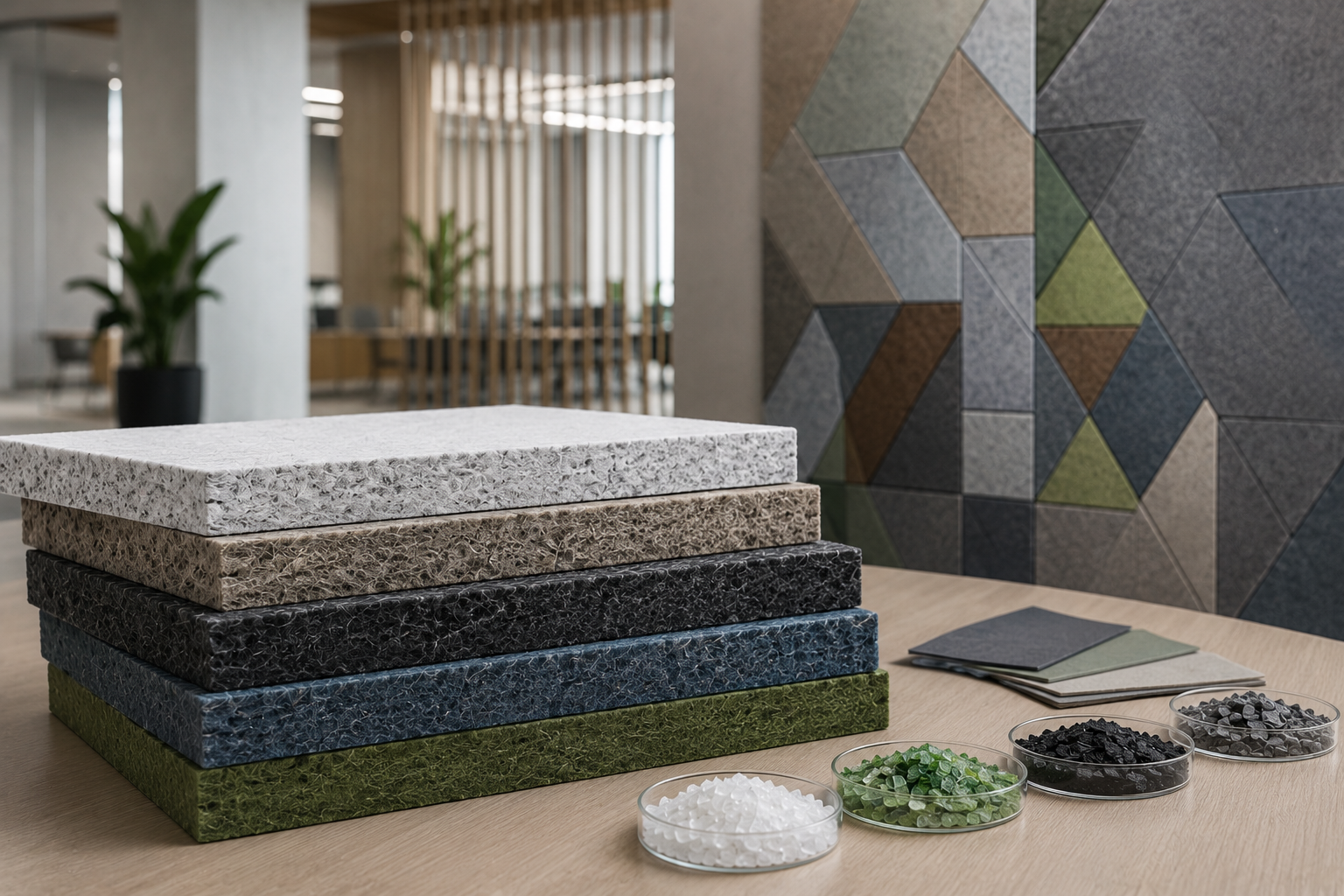
Archiphonic is PET acoustic felt for sound absorption within a room. Its porous structure and visible finish make it suitable for acoustic elements that form part of the interior design.
What to consider
- sound absorption for the selected thickness and mounting;
- colour and texture alongside the surrounding finishes;
- cutting and forming requirements for the proposed geometry;
- installation conditions and the product care instructions;
- the specification of any bespoke form or integration.
From fibre to architectural element
1. Start with the material
PET fibres form the basis of Archiphonic acoustic felt. Request the material specification for the product you intend to use.
Recycled content should be stated for the selected material using the applicable supplier documentation.
Review the material brief:
- intended use;
- required finish;
- installation conditions;
- supporting documentation.
2. Understand porous absorption
PET fibres are formed into a porous structure that allows sound to enter the material.
Interaction within that structure dissipates part of the sound energy, reducing the energy reflected into the room.
3. Check the project requirements
Review the selected assembly against:
- the room’s acoustic brief;
- the applicable fire requirements.
Bring together:
- the material specification;
- the relevant test reports;
- the installation details;
- the supporting substrate and fixing requirements.
4. Select the construction
Thickness and mounting affect acoustic performance. Confirm which listed thickness applies to the selected product:
6, 9, 12 and 24 mm.
Check which construction is used in the selected product before comparing its acoustic data.
Any project requirement for environmental declarations or building-assessment documentation should be checked against the available evidence.
5. Develop the form
Coordinate the final geometry with the material construction, supporting structure and mounting method.
Explore applications including:
- acoustic panels;
- ceiling fins and baffles;
- three-dimensional elements;
- decorative structures;
- bespoke architectural products.
Plan openings for lighting and services during design, and review any change to the tested construction with the project team.