PHONITURA / ARTICLE
What is Archiphonic PET acoustic felt?
PET felt: sound absorption as an interior material
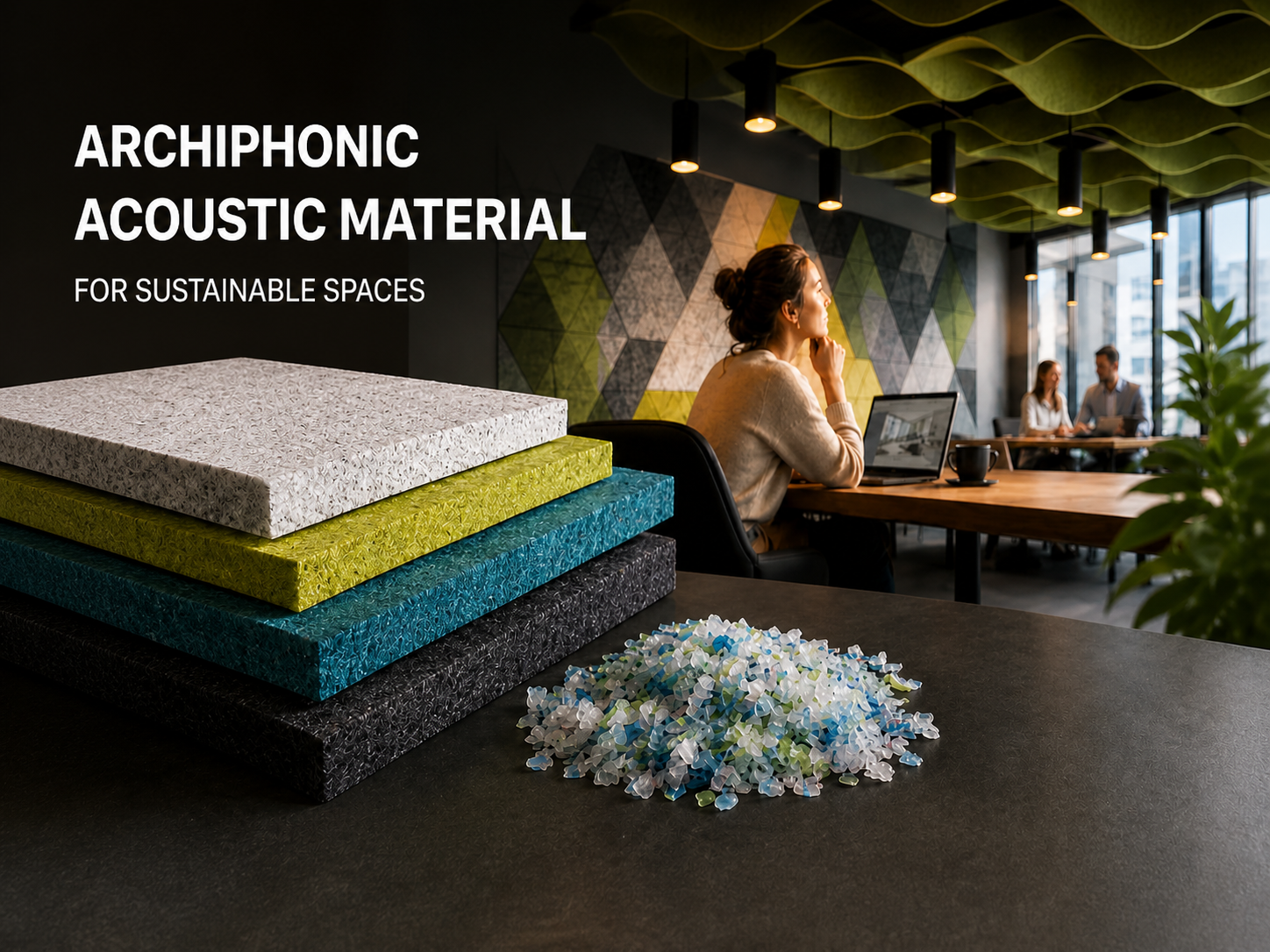
PET acoustic felt absorbs part of the sound that reaches its porous fibre structure. Used in suitable quantities and positions, it helps control reflections and excessive reverberation within a room.
Archiphonic brings that acoustic function into panels, ceiling elements, luminaires and other interior objects. The right specification depends on the room and the selected product configuration.
1. What Is PET Felt?
PET felt, also known as polyester felt, is a non-woven material made from polyethylene terephthalate fibres. PET is the same type of plastic widely used for beverage bottles and packaging.
Archiphonic is a PET-based interior acoustic material. Its exposed felt surface can contribute sound absorption and become part of the architectural finish.
From PET fibre to acoustic element
Material origin
Archiphonic uses PET fibres. Ask for the composition and recycled-content documentation for the product being specified.
An exact recycled percentage or bottle equivalent should come from the applicable material documentation, with a clear unit and calculation basis.
Compare material claims using that documented basis when preparing the project specification.
Preparing the raw material
Recycled PET feedstock is prepared before it is processed into fibre. Preparation affects the consistency of the resulting material.
Typical preparation includes:
- removing labels and adhesives;
- removing contaminants;
- shredding into small flakes or granules;
- washing;
- drying the prepared material.
Fibre Formation
Fibre production turns prepared PET into a form that can be assembled into felt. The process includes:
- melting the PET;
- extrusion through a filtration and spinneret system to create fine fibres;
- rapid cooling;
- stretching of the fibres to improve strength and structural stability.
The resulting fibres provide the starting structure for the acoustic felt.
Forming the porous structure
Layers of fibres are formed into the required felt construction.
The connected fibre structure contains pores through which sound can enter. Its acoustic behaviour depends on the material construction and how the finished element is mounted.
Use the test data for the selected product when assessing absorption at the frequencies relevant to the room.
Checking fire performance
Fire performance must be considered for the specified material and finished assembly.
Review the documentation for:
- the named product;
- the material construction;
- the test standard;
- the classification;
- the tested mounting;
- the intended application.
A classification applies within its documented scope. Check it against the requirements of the project and market.
2. How PET felt works acoustically
Acoustic materials generally address two different objectives:
- sound absorption, which reduces echo and reverberation within a room;
- sound insulation, which limits sound transmission between different rooms.
PET felt is used primarily for sound absorption inside the treated room. Sound transmission through walls, floors, doors or ceilings requires a separate assessment of the building construction.
2.1 Sound entering the fibre structure
Fine fibres form a porous network within the felt.
As sound enters the network, interaction with the fibres dissipates part of its energy as a small amount of heat.
Appropriate treatment can help:
- reduce reverberation;
- control echo;
- control the build-up of reflected sound;
- support clearer conversation;
- create a calmer acoustic environment.
2.2 Frequency and mounting
Absorption changes with frequency. Compare the relevant test results for the selected thickness and mounting rather than assuming the same result across all products.
The acoustic response depends on:
- material thickness;
- density;
- distance from the supporting surface;
- the presence of an air gap;
- panel geometry;
- installation method.
Media rooms and recording studios often require treatment that addresses low frequencies as well as speech. Review the complete acoustic design before selecting the felt elements.
2.3 Making the treatment visible
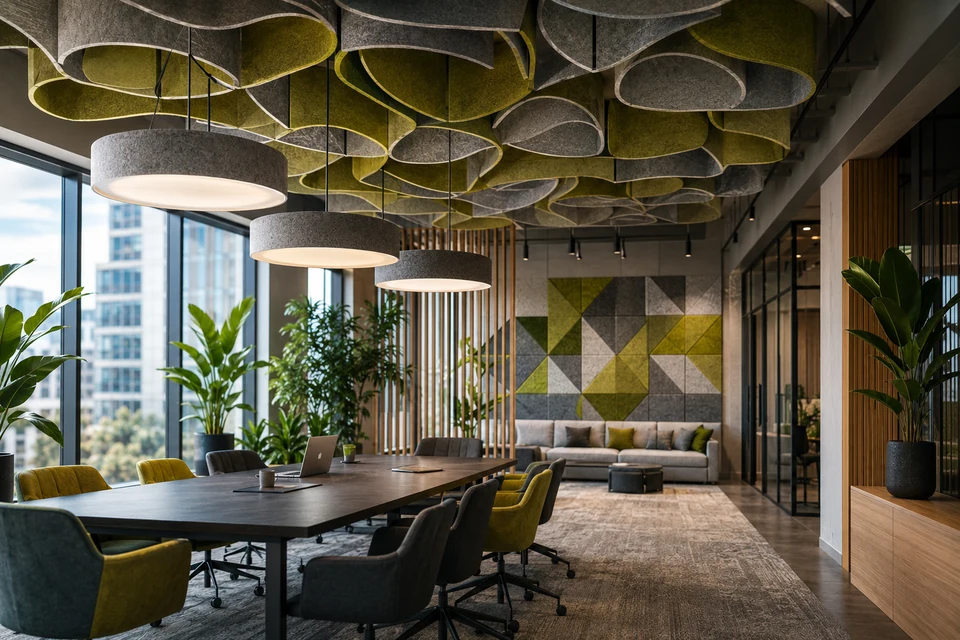
The exposed felt can serve as both an acoustic surface and an interior finish.
Colour, cutting and forming allow a range of geometric panels, ribs and sculptural compositions. Confirm the available options for the product and construction.
This gives the designer a way to include acoustic treatment in the composition from the start.
Explore Archiphonic applications including:
- decorative wall panels;
- ceiling baffles;
- suspended structures;
- acoustic luminaires;
- space dividers;
- three-dimensional compositions;
- branded patterns;
- bespoke architectural installations.
2.4 Material documentation
Composition
Request the declared composition and recycled-content information for the selected material.
Construction
Check the fibre, binder and other component information in the product specification.
Handling
Follow the manufacturer’s handling and installation instructions for the finished element.
Service conditions
Review the proposed environment and the product’s use limitations before specifying it.
2.5 Installation and care
Product geometry
Confirm the dimensions and supporting structure for the selected product.
Location
Check whether the installation conditions are compatible with the specified material and finish.
Mounting approach
Different product types may use different mounting arrangements. Confirm the appropriate system before installation:
- adhesive systems;
- mechanical fixings;
- suspension cables;
- ceiling rails;
- modular frames;
- freestanding structures.
Fixings, clearances and the substrate need to suit the finished product. Use the approved installation details and an appropriately qualified installer.
3. Where Is Acoustic PET Felt Used?
Open-Plan Offices and Coworking Spaces
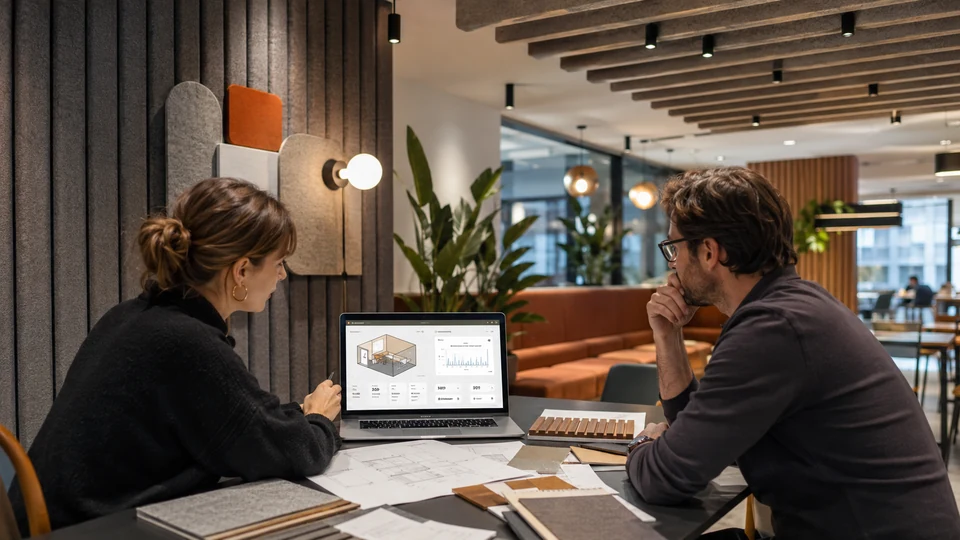
Ceiling elements, wall panels and screens can add sound absorption around desks and meeting areas. Their contribution should be assessed as part of the whole room.
Restaurants, Cafés and Hospitality Interiors
Treat reflective surfaces around dining and gathering areas to help control reverberation from conversation and activity.
Educational Environments
Plan sound absorption around teaching and discussion so the room supports speech intelligibility.
Architectural and Interior Design Projects
PET felt can be used to create:
- feature walls;
- sculptural ceiling installations;
- functional decorative elements;
- branded compositions;
- colour-based zoning;
- integrated acoustic lighting.
Home Cinemas and Media Rooms
Control early reflections and reverberation as part of a media-room design, with low-frequency treatment assessed separately.
Recording and Podcast Studios
PET felt can contribute absorption to a recording space, with the placement and coverage chosen around the intended recording use.
Review the complete room response and the required sound insulation before finalising a studio specification.
Selecting the next step
Start with the room’s use, dimensions and finishes. Then compare products using the construction and mounting that will actually be installed.
Bring these decisions together:
- required sound absorption;
- documented material composition;
- care requirements;
- product geometry;
- colour and texture;
- mounting and bespoke details.
Send the room plan and acoustic brief to Phonitura. We will discuss how Archiphonic products can fit the interior and which information is needed for the next specification stage.