
When Children’s Play Gets Too Noisy: 7 Effective Solutions
A child’s room is a small world filled with laughter, movement and energetic play. Toy cars race across the floor, balls bounce against the walls, and excited voices can be heard throughout the home.
It is impossible—and unnecessary—to eliminate every sound. However, the acoustic environment can be improved without restricting a child’s activity. The right combination of textiles, furniture, acoustic products and room zoning helps reduce echo, soften everyday noise and create a calmer, more comfortable space.
Here are seven practical solutions.
1. Use Carpets, Curtains and Soft Furnishings
One of the simplest ways to improve room acoustics is to add soft materials that absorb sound instead of reflecting it.
A thick rug or fitted carpet helps reduce the sound of footsteps, moving toys and objects falling onto the floor. Curtains soften reflections from windows, while cushions, upholstered furniture and soft toys add more sound-absorbing surfaces.
The more hard, uncovered surfaces there are, the more reverberant the room will feel.
Tip: Laminate flooring, parquet, tiles and large uncovered windows can increase reflections. A large rug and full-length curtains can make an immediate difference.
2. Position Furniture Strategically
Furniture placement also affects how sound travels through a room.
Large wardrobes, bookcases and storage units filled with books, toys or fabric boxes can help break up sound reflections. Upholstered chairs, beanbags and pouffes also contribute to a softer acoustic environment.
A well-positioned bookcase can provide an additional buffer between the child’s room and an adjoining space, although furniture alone should not be considered a complete sound-insulation system.
Tip: Place large storage units against shared or particularly reflective walls where practical.
3. Reduce Hard, Reflective Surfaces
Glass, metal, bare walls and other smooth surfaces reflect sound back into the room, increasing echo and overall noise levels.
To reduce these reflections, consider adding:
- fabric wall coverings;
- acoustic wall panels;
- textile artwork;
- upholstered decorative elements;
- acoustic pictures or shaped wall compositions.
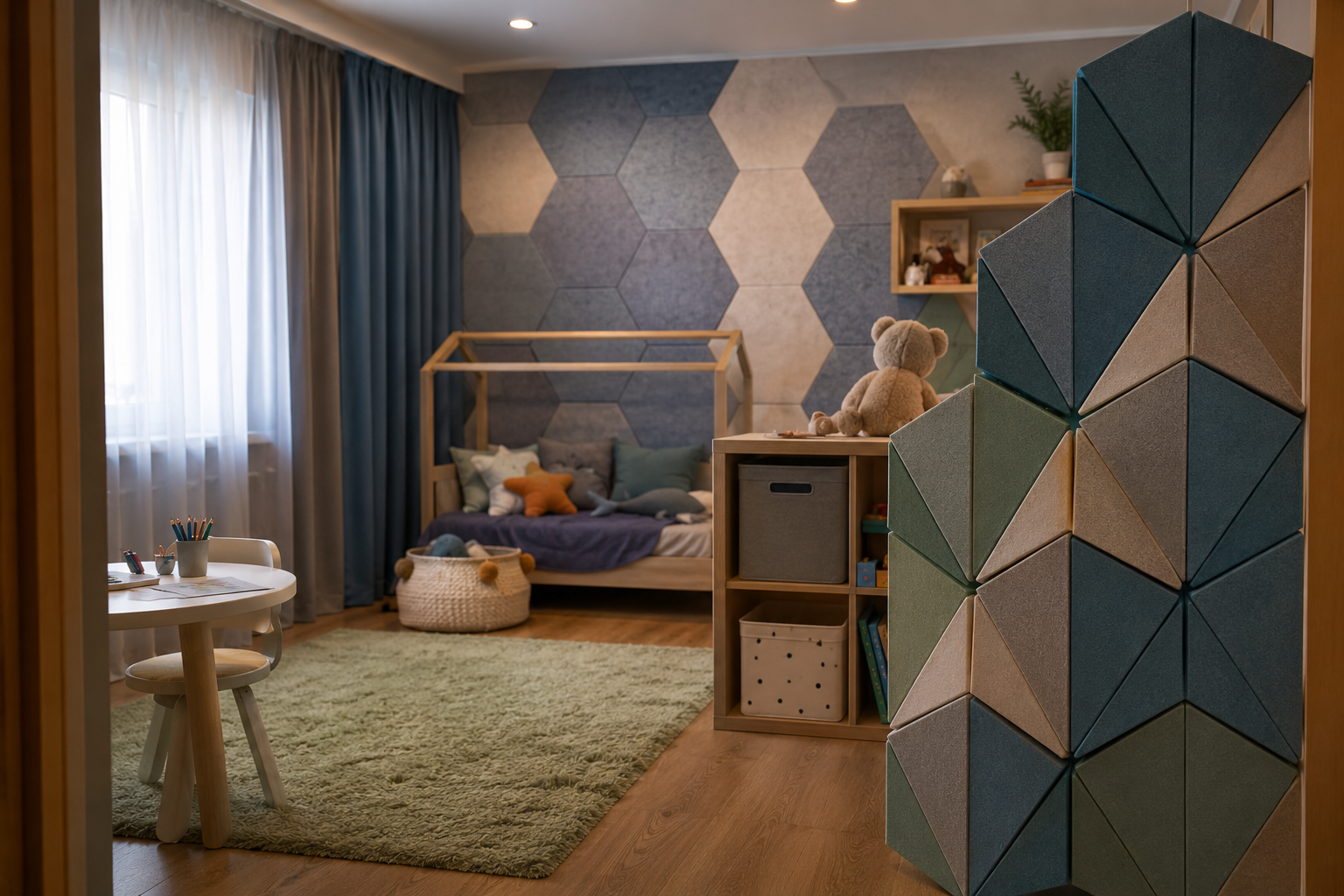
PHONITURA acoustic panels and decorative compositions combine sound absorption with colour, texture and visual design.
Tip: A varied surface with soft or porous materials generally produces fewer harsh reflections than a completely smooth wall.
4. Add Acoustic Partitions
When it is not possible to alter the walls or flooring, freestanding acoustic partitions provide a flexible alternative.
Partitions made from PET felt absorb some of the sound within the room and can be moved when the layout changes. They are available in different colours, shapes and sizes, making them easy to incorporate into a child-friendly interior.
They can also divide the room into separate areas for:
- active play;
- studying;
- reading;
- rest.
Tip: Acoustic partitions are particularly useful in open-plan homes where sound travels easily between different functional areas.
5. Improve Ceiling Acoustics
If the room has a high or highly reflective ceiling, suspended acoustic panels, clouds or baffles can help reduce reverberation inside the room.
Where noise is coming from the flat above, acoustic absorption alone will not provide full sound insulation. Structure-borne noise from footsteps or moving furniture usually requires a properly designed ceiling system that may include resilient fixings, insulation, additional layers and a suspended construction.
Tip: Decorative suspended acoustic elements are an effective option for reducing echo without carrying out extensive renovation work. Noise transmission from neighbouring properties should be assessed separately by a building-acoustics specialist.
6. Address Impact and Structure-Borne Noise Correctly
Footsteps, knocks, dropped objects and moving furniture create impact noise, which can travel through floors, walls and other parts of the building structure.
The appropriate solution depends on where the noise originates. It may involve:
- resilient floor underlays;
- floating floor systems;
- isolated ceiling constructions;
- decoupled wall linings;
- acoustic insulation;
- high-density barrier membranes.
PET acoustic panels can reduce reflections and improve comfort within the room, but they are not a substitute for a complete sound-insulation construction.
Tip: Before covering one wall or ceiling, identify the actual transmission path. Treating the wrong surface may produce little noticeable improvement.
7. Create a Dedicated Play Zone
A clearly defined play area helps keep the most active activities within one part of the room.
Use soft mats, rugs, cushions and warm lighting to create a comfortable play corner. Acoustic wall panels or partitions can help separate it visually and acoustically from the study or sleeping area.
This approach also makes the room easier to organise and gives each activity its own environment.
Tip: Position the most active play area away from shared walls where possible, especially in flats and terraced homes.
A Quieter Room Without Restricting Play
A child’s room can become calmer without limiting movement, creativity or fun.
Carpets, curtains, upholstered furniture and thoughtful room planning help soften everyday sounds. Acoustic panels, partitions and suspended elements reduce reverberation while becoming part of the interior design. More serious noise transmission through walls, floors or ceilings may require a dedicated sound-insulation system.
The aim is not complete silence. It is a comfortable acoustic balance in which children can play freely while the rest of the home remains more peaceful.
Explore PHONITURA acoustic solutions and create a child’s room that is colourful, comfortable and designed with sound in mind.