PHONITURA / ARTICLE
Acoustic lighting: coordinating sound, light and form
Illumination and sound absorption in one object
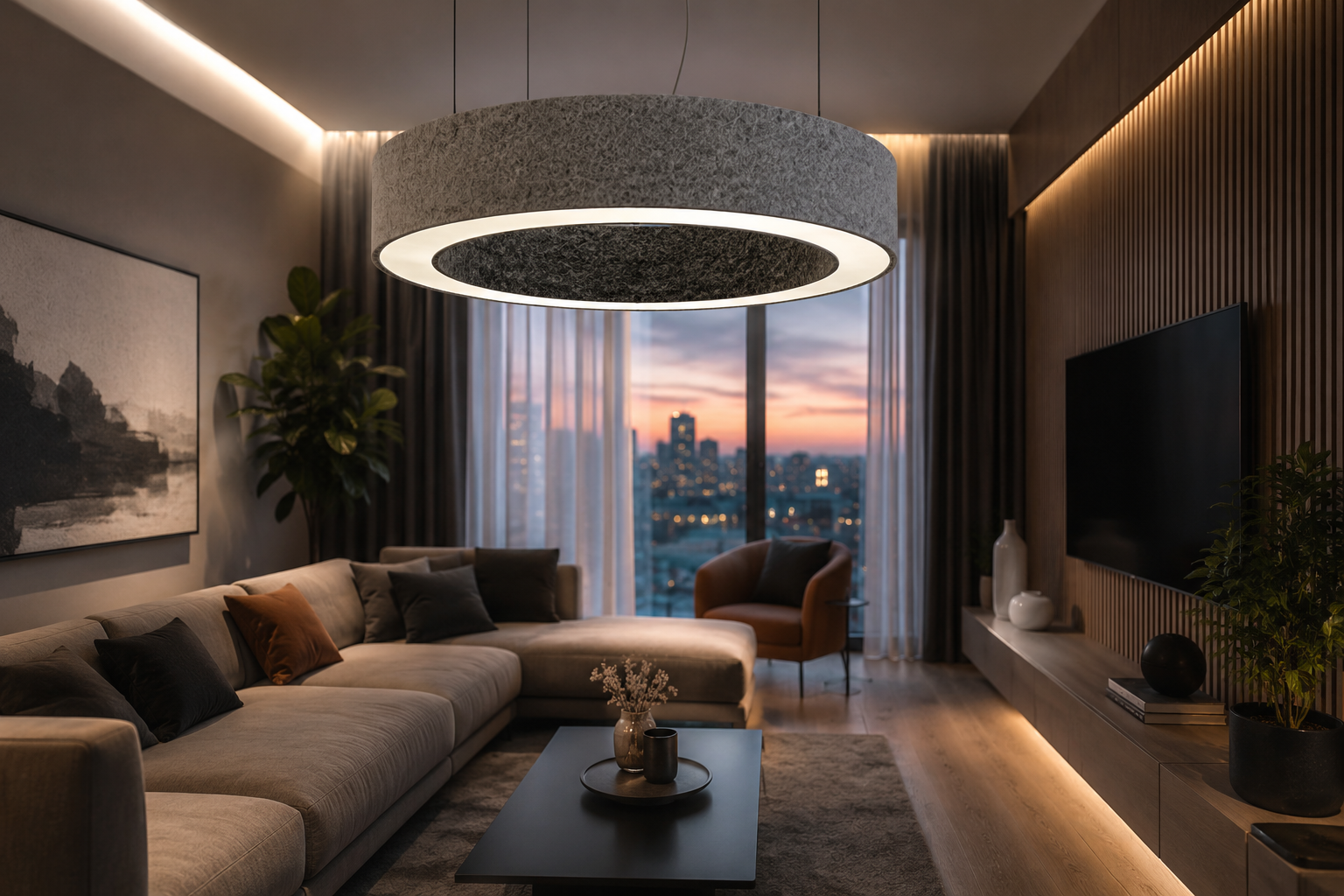
Acoustic lighting places sound-absorbing material around a luminaire. It can contribute to the room’s acoustic treatment while fulfilling a lighting task.
Use it where a meeting, working or dining area needs both illumination and control of reflected sound.
Treat the lighting requirement and the acoustic contribution as separate parts of the same specification.
The luminaire’s lighting data establishes its illumination role. The acoustic material and tested configuration establish how it contributes absorption within the room.
How the acoustic part works
Archiphonic felt around the light source absorbs part of the sound energy that reaches its porous structure.
The amount of treatment required depends on the room and the other surfaces; a pendant should be considered within that wider scheme.
Where acoustic lighting fits
Rooms for conversation
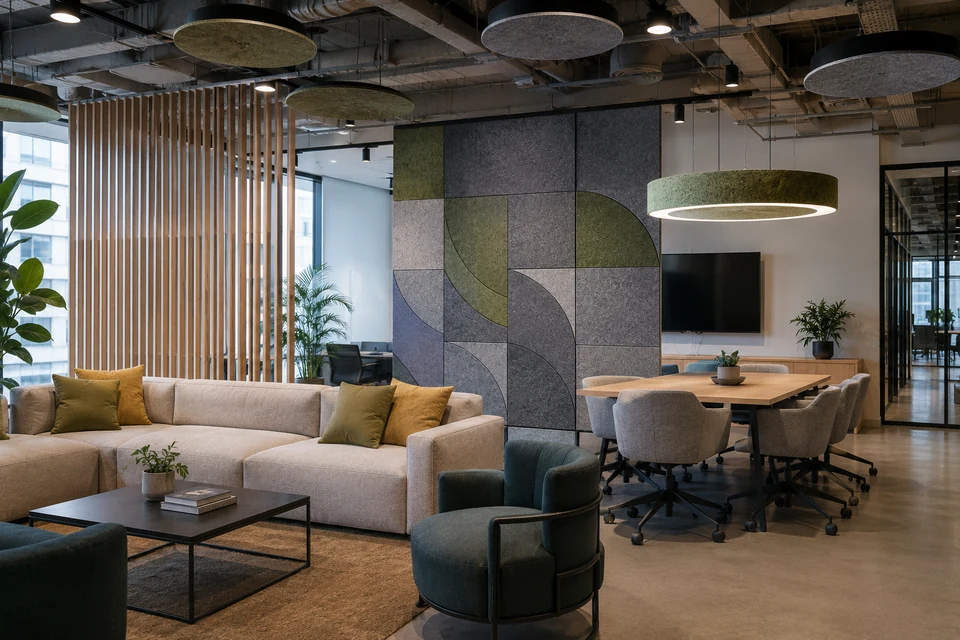
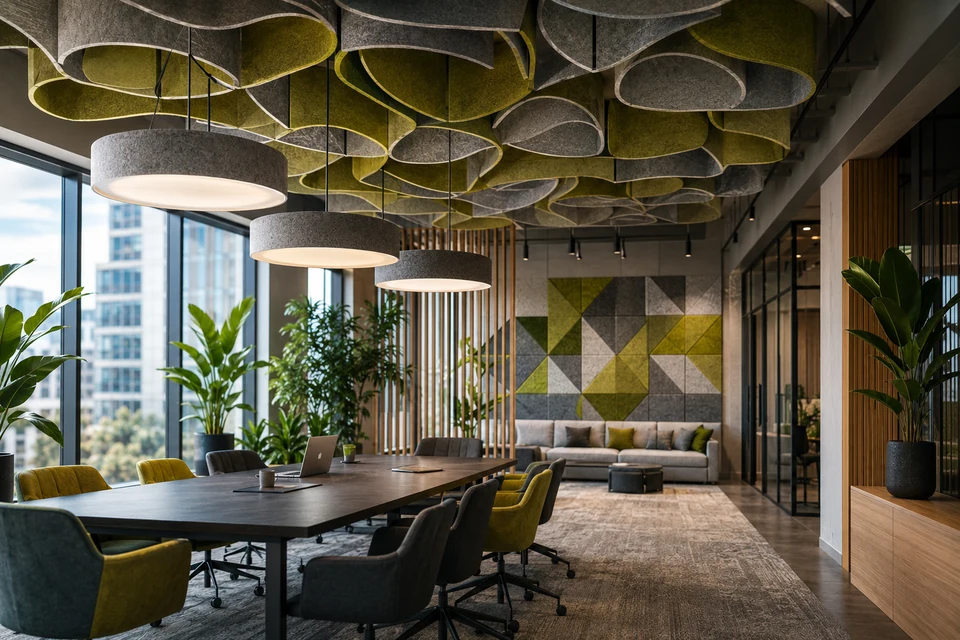
Meeting and dining spaces often need reverberation control. Acoustic luminaires can introduce absorptive surfaces overhead while maintaining a clear lighting composition.
An architectural object
A luminaire’s shape, scale and colour can make the acoustic treatment part of the interior’s identity.
Coordinate both functions
For each selected configuration, review:
- the lighting task and luminaire data;
- the sound-absorbing material, mounting and acoustic information.
Plan the suspension, service connections and treatment coverage together, particularly where ceiling space is limited.
Material specification
Archiphonic is PET acoustic felt. Request the composition and relevant performance documentation for the selected product.
Check any material or environmental claim against that documentation before including it in the project specification.
Application settings
Consider acoustic lighting for:
- residential interiors;
- home offices;
- meeting rooms;
- open-plan workplaces;
- restaurants and cafés;
- hotel lounges;
- reception areas;
- educational spaces;
- public interiors.
Match the luminaire to the task beneath it and coordinate the number and positions with the acoustic design. Sound transmission from adjacent rooms needs a separate building-acoustics assessment.
Develop the complete scheme
Start with how the room is used and the conditions needed for conversation, work or dining.
Lighting establishes illumination and visual emphasis; acoustic treatment manages reflected sound.
Phonitura brings these functions into a range of sculptural luminaires that can be coordinated with wall and ceiling products.
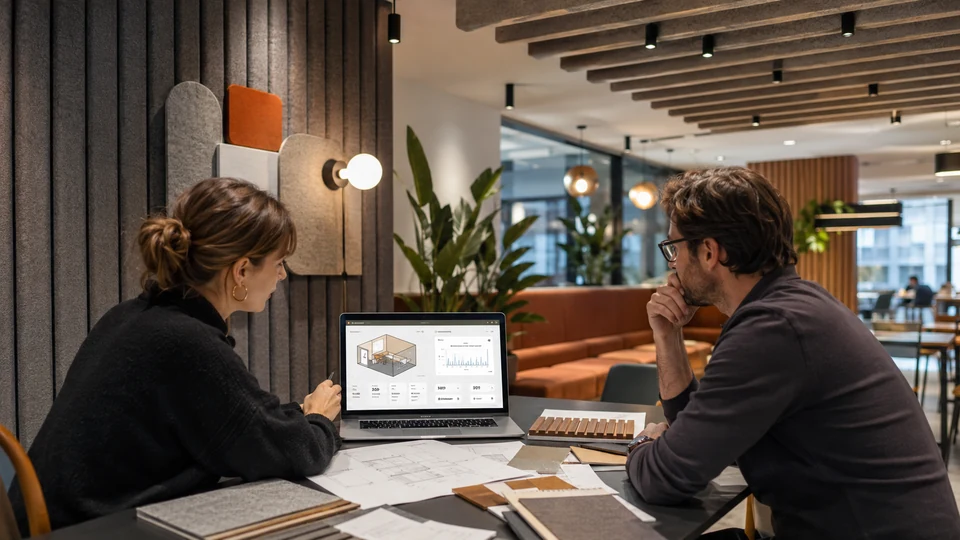
Send the room plan and lighting brief to discuss the product configuration and acoustic treatment.